Rio Grande On Track For Record Low Flows; Elephant Butte Reservoir May Fall To 2% Of Capacity By August
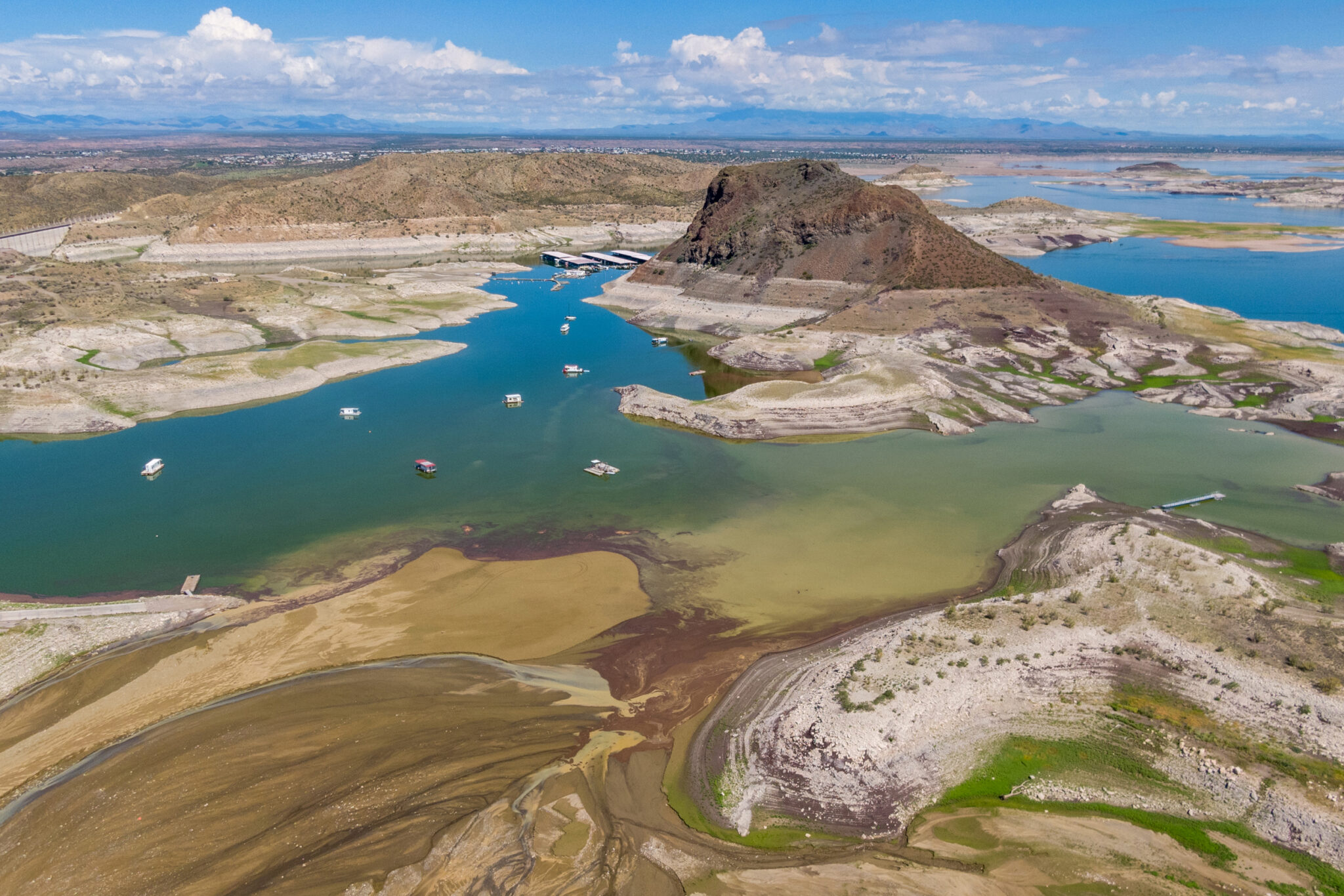 An aerial view of Elephant Butte Reservoir along the Rio Grande near Truth or Consequences, N.M., in August 2022. Credit: Mitch Tobin/The Water Desk
 Ed. This photograph is from August 2022; mid-month reservoir level was 4250'; current levels for the preceding week were 4290'.
https://www.usbr.gov/rsvrWater/HistoricalApp.html
EDIT
Snowpack in Colorado was well below average this winter and a warm snap in March sped up snowmelt. As of mid-April, snow water equivalent was at 13 percent of median for the Rio Grande headwaters. Elephant Butte Reservoir in Southern New Mexico is currently at less than 13 percent capacity, leaving communities and farmers downstream expecting to receive river water for only a short period of time this year.
The compact representatives laid out how these compounding factors drying the Rio Grande will impact water users and wildlife across the basin. According to the U.S. Bureau of Reclamation, which manages reservoirs along the Rio Grande, most of the reservoirs are at less than 15 percent capacity. Summer monsoon rains have become less reliable in New Mexico. If the monsoon disappoints this summer, Elephant Butte could fall to 2 percent of its capacity by late August. Last year the reservoir fell to 3.8 percent capacity in August. “We have had many years to prepare during this third decade of extended drought,” John Irizarry, the acting area manager of Reclamation’s Albuquerque office, said in a statement. “I am confident our team will work closely with all stakeholders to make the available water supply stretch as far as possible.”
Low water levels on the Rio Grande impact wildlife that relies on the river. Vance Wolf of the U.S. Fish and Wildlife Services Albuquerque office reported on the status of the Rio Grande silvery minnow at Friday’s meeting. The endangered fish now only survives in a stretch of the Rio Grande in Central New Mexico.
When low flows cause the Rio Grande to dry out in this area, biologists rescue fish from the riverbed to ensure the population survives. Wolf said that the agency observed a silvery minnow “population crash” in 2025. “River drying may be some of the most extensive we’ve ever seen,” Wolf said, looking ahead to this summer. Drying began in the San Acacia reach on March 27, the earliest recorded date it has dried in the past 30 years, according to the Bureau of Reclamation.New Mexico State Engineer Elizabeth Anderson said that the “dire forecasts” will make for a “challenging year.”
EDIT
https://insideclimatenews.org/news/20042026/rio-grande-compact-meeting-low-river-flows/
