Welcome to DU!
The truly grassroots left-of-center political community where regular people, not algorithms, drive the discussions and set the standards.
Join the community:
Create a free account
Support DU (and get rid of ads!):
Become a Star Member
Latest Breaking News
Editorials & Other Articles
General Discussion
The DU Lounge
All Forums
Issue Forums
Culture Forums
Alliance Forums
Region Forums
Support Forums
Help & Search
Environment & Energy
Related: About this forum
Towngas launches Hong Kong's first hydrogen-powered EV charging system for a commercial building
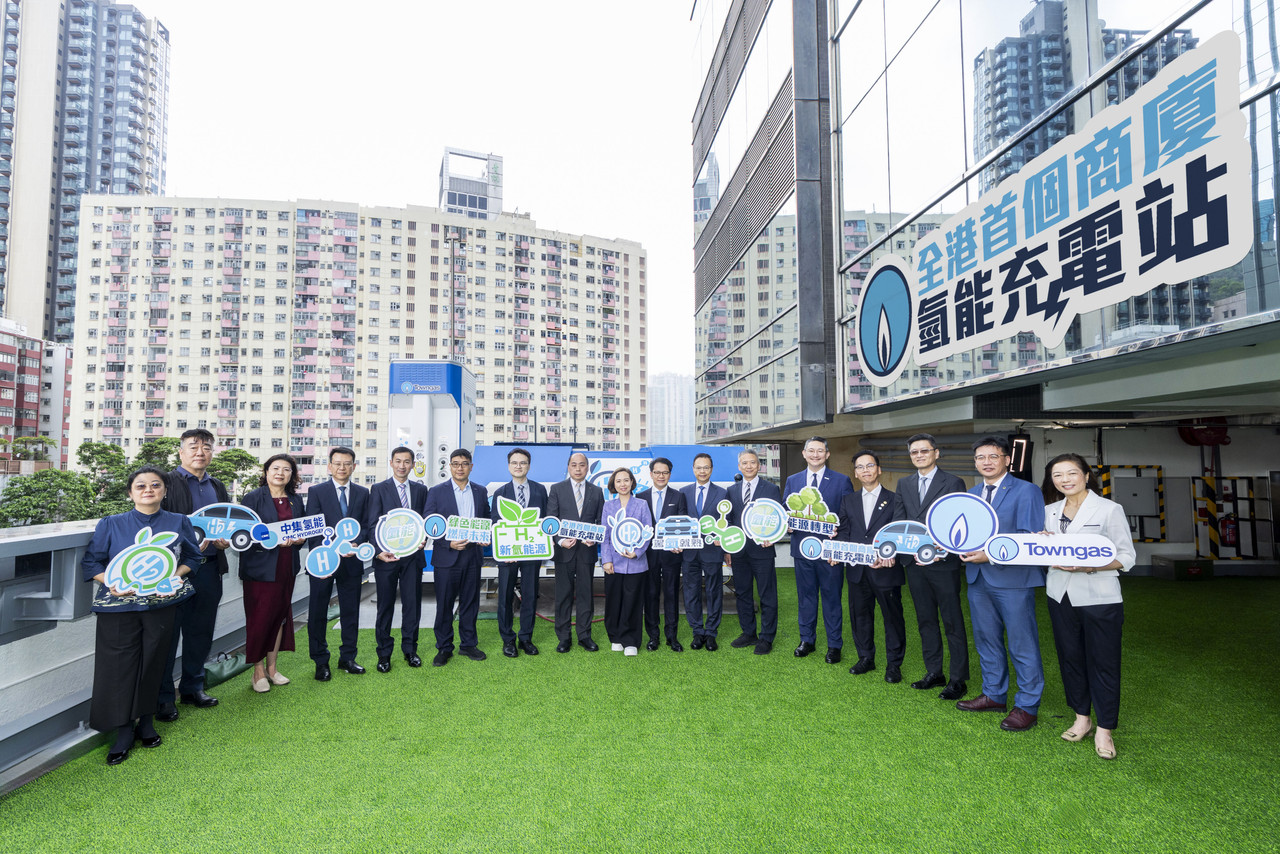
Towngas holds the commissioning ceremony for Hong Kong’s first commercial building hydrogen-powered EV charging system at its North Point headquarters
Towngas launches Hong Kong’s first hydrogen-powered EV charging system for a commercial building opening up new applications for green transport
May 1, 2026 -- As electric vehicles (EVs) become increasingly popular, many older commercial buildings face a bottleneck when installing new charging facilities due to the limited load capacity of their existing power systems. The Hong Kong and China Gas Company Limited (Towngas) announced today the launch of Hong Kong’s first hydrogen-powered EV charging system for a commercial building at its North Point headquarters. By leveraging a flexible hydrogen power generation solution to supply additional electricity, the project eliminates the need for large-scale upgrades to the building’s existing power supply. The new solution also enables users to deploy green hydrogen-powered charging systems, achieving zero-carbon power supply.
This project is a collaboration between Towngas and CIMC Enric, a hydrogen equipment manufacturer and engineering services provider, and adopts a bottled-hydrogen supply model using locally produced hydrogen. Cylinders are filled with locally produced hydrogen, transported to the building, and connected to hydrogen power generation equipment to supply electricity to three EV chargers. In general, each kilogram of hydrogen can generate approximately 15 kWh of electricity. Users can select hydrogen power generation systems of different scales according to their electricity demand.
In addition to extracting hydrogen from the town gas network, the bottled-hydrogen model provides an additional option for hydrogen applications in Hong Kong. Don Cheng Hill-kwong, Towngas Chief Operating Officer – Hong Kong Business, said: “If last year’s automatic hydrogen charging system at Science Park and the power generator at the Fanling golf course for the National Games were the first chapter of our hydrogen application story, today’s commercial-building project is the sequel.” He added that this bottled hydrogen supply model offers high flexibility, can overcome site constraints, and enables commercial buildings to deploy EV charging systems without extensive electrical upgrades, marking an important step in opening up new applications for green transport.
“More importantly, this hydrogen solution can utilise green hydrogen generated from the Tseung Kwan O landfill to achieve zero-carbon power supply. Hong Kong’s first project to convert landfill gas into green hydrogen is set to commence this year, bringing the city one step closer to local green hydrogen application.” Cheng added...more
https://markets.businessinsider.com/news/stocks/towngas-launches-hong-kong-s-first-hydrogen-powered-ev-charging-system-for-a-commercial-building-opening-up-new-applications-for-green-transport-1036095120
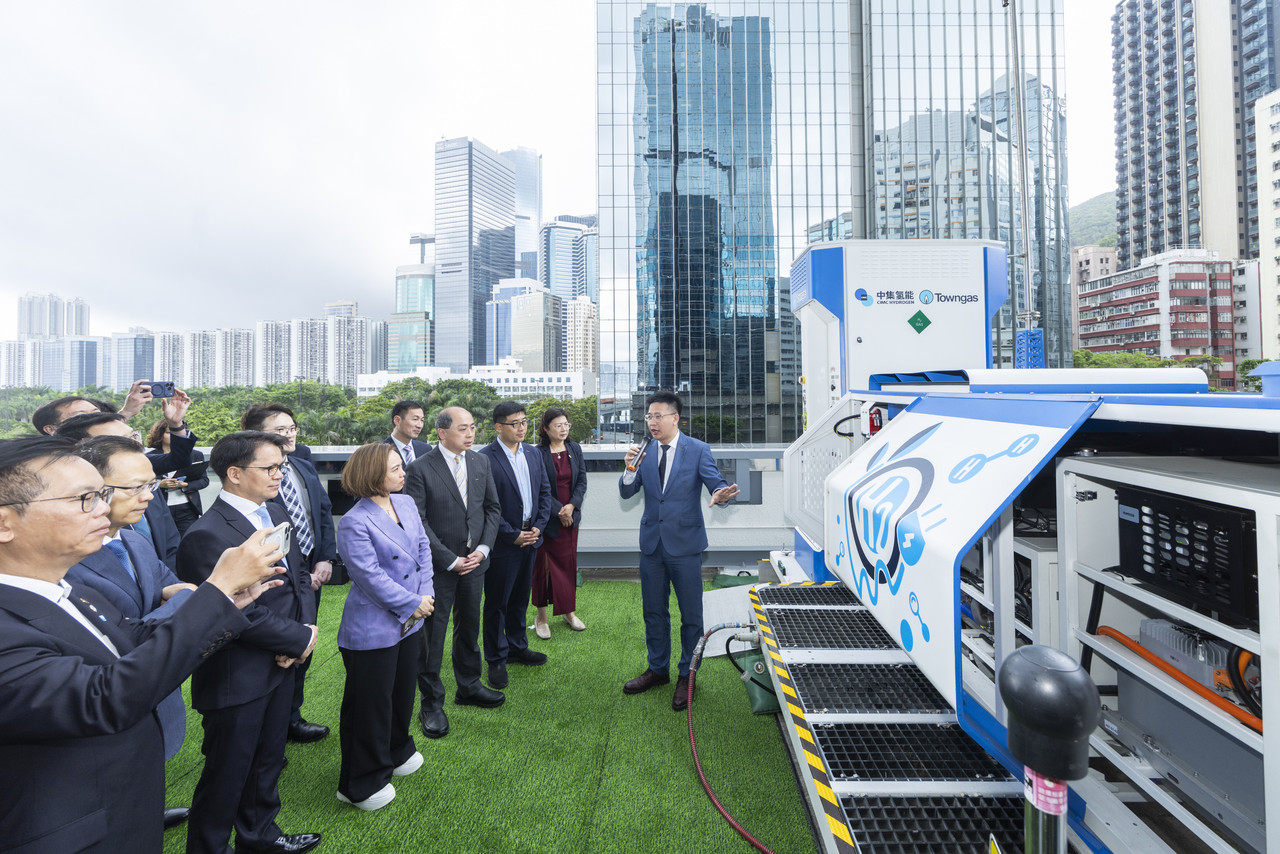
Mr Sammy Kong Siu-kuen (1st from right), General Manager – Commercial & Industrial Marketing & Sales of Towngas, introduces Hong Kong’s first hydrogen-powered EV charging system for commercial buildings to the guests.
Hong Kong Is About To Become The FIRST City To Run 100% On Hydrogen
"We're not gonna [sic] have hydrogen" - Captain Bonespurs

Link to tweet
5 replies
 = new reply since forum marked as read
Highlight:
NoneDon't highlight anything
5 newestHighlight 5 most recent replies
= new reply since forum marked as read
Highlight:
NoneDon't highlight anything
5 newestHighlight 5 most recent replies
= new reply since forum marked as read
Highlight:
NoneDon't highlight anything
5 newestHighlight 5 most recent replies
Towngas launches Hong Kong's first hydrogen-powered EV charging system for a commercial building (Original Post)
Caribbeans
19 hrs ago
OP

thought crime
(1,752 posts)1. China's companies quietly build the foundations of the new economy
In the future, they will be severely criticized for deviously capturing the market in hydrogen infrastructure while clueless western companies did nothing.

OKIsItJustMe
(22,001 posts)2. Ironically,
https://www.science.org/content/article/breakthrough-2025
Honestly, none of these technologies (including fuel cells) are new.
The Mercury missions used batteries for on-board electrical power. The longer-duration Gemini missions required fuel cells. Apollo continued to use fuel cells.
When Skylab (our first space station) was put into orbit, it was powered by solar panels.
Gerry Ford started serious development of ground-based solar power. Jimmy Carter expanded the program. Saint Ronnie axed it.
…
So far, this is not a story of new technology. China is “more or less relying on the same core [solar] technology that the United States invented half a century ago,” Li says. In those days the U.S. made boutique panels for spacecraft; now, China makes them for the world—better, vastly cheaper, and in staggering quantities.
…
So far, this is not a story of new technology. China is “more or less relying on the same core [solar] technology that the United States invented half a century ago,” Li says. In those days the U.S. made boutique panels for spacecraft; now, China makes them for the world—better, vastly cheaper, and in staggering quantities.
…
Honestly, none of these technologies (including fuel cells) are new.
The Mercury missions used batteries for on-board electrical power. The longer-duration Gemini missions required fuel cells. Apollo continued to use fuel cells.
When Skylab (our first space station) was put into orbit, it was powered by solar panels.
Gerry Ford started serious development of ground-based solar power. Jimmy Carter expanded the program. Saint Ronnie axed it.
OKIsItJustMe
(22,001 posts)3. 50 years of fuel cells started with NASA's Gemini 5
https://theamericanenergynews.com/50-years-of-fuel-cells-started-with-nasas-gemini-5/
Fuel cells use hydrogen and oxygen in a chemical reaction – not combustion – to generate electricity
Fifty years ago today, Gemini 5 made history as the first manned spacecraft to utilize fuel cells, allowing the United States to seize the manned spaceflight endurance record from the Soviet Union for the first time, and launching the commercial fuel cell industry, says the Fuel Cell and Hydrogen Energy Association.
“Today we are celebrating fifty years of fuel cell deployment, beginning in 1965 with the Gemini 5, the first deployment of fuel cells in a manned flight, achieving the first crucial steps that helped America to land a man on the Moon,” said Association President Morry Markowitz in a press release.

This successful historic mission led to the use of fuel cells on all subsequent American manned space missions throughout the Gemini, Apollo, and Space Shuttle programs.
“The initial support of NASA provided the catalyst needed to launch the commercial fuel cell industry. Fuel cell and hydrogen technology has evolved and improved exponentially since then, moving from the rarity of space travel to everyday power for passenger vehicles, forklifts, utilities, businesses, homes, and more,” said Markowitz.
…
Fifty years ago today, Gemini 5 made history as the first manned spacecraft to utilize fuel cells, allowing the United States to seize the manned spaceflight endurance record from the Soviet Union for the first time, and launching the commercial fuel cell industry, says the Fuel Cell and Hydrogen Energy Association.
“Today we are celebrating fifty years of fuel cell deployment, beginning in 1965 with the Gemini 5, the first deployment of fuel cells in a manned flight, achieving the first crucial steps that helped America to land a man on the Moon,” said Association President Morry Markowitz in a press release.
This successful historic mission led to the use of fuel cells on all subsequent American manned space missions throughout the Gemini, Apollo, and Space Shuttle programs.
“The initial support of NASA provided the catalyst needed to launch the commercial fuel cell industry. Fuel cell and hydrogen technology has evolved and improved exponentially since then, moving from the rarity of space travel to everyday power for passenger vehicles, forklifts, utilities, businesses, homes, and more,” said Markowitz.
…
thought crime
(1,752 posts)4. Technically, not new
The concepts around a hydrogen economy are not new either. But China is actually trying to make it happen.
OKIsItJustMe
(22,001 posts)5. More power to 'em
It’s just sad to see how they’re successfully making great use of the technology we chose not to.